








Reviving healthcare marketing: the transformative power of ‘smart nudges’ to combat HCP burnout in 2025
Originally Posted on Pharmalive April 23, 2025
Despite technology becoming an increasingly vital resource for supporting healthcare operations both nationally and globally, did you know that nearly 50 percent of healthcare professionals (HCPs) in United States are facing challenges related to burnout?
Though this largely stems from the growing demands of work schedules coupled with the complexities of patient care, marketing partners often inspired by the intention of achieving ‘high engagement numbers’ over ‘initiating quality HCP engagement’ sometimes find it difficult to fully understand the needs of HCPs, further making the burnout more noticeable. This, in turn, can affect the overall quality of healthcare outcomes and create obstacles for HCPs in effectively addressing these challenges. While it has been convenient of industry stakeholders to cite ‘digital integration’ as a primary reason for inducing HCP burnout, the discussions around these challenges date back to the 1970’s. Over the years, various studies have attempted to highlight different causes behind the challenge. To speak of recent years, the COVID-19 pandemic further exaggerated the problem, with 62.8 percent of physicians reporting at least one symptom of burnout in 2021, compared to 38.2 percent in 2020. While demanding work schedules and administrative tasks have been significant contributors, the healthcare advertising industry also plays a crucial role, dating back to before the rise of digital messaging. For instance, a 2000 National Library of Medicine study found that over 52 percent of doctors believed prescription advertisements contained mostly inaccurate information, underscoring the need for context-relevant messaging, while a recent study by athenahealth attributes HCP burnout to excessive data.
Leveraging ‘smart nudging’: a way of addressing HCP burnout in 2025
The studies and surveys conducted over the past decades clearly indicate that HCP burnout cannot be attributed to a single factor, nor is it solely linked to advancements in technology. Considering the same, it is imperative for the healthcare marketing industry to holistically focus on ‘personalized HCP engagement’ that prioritizes time relevant messaging and patient-focussed outcomes over traditional performance metrics. For healthcare marketers, one of the most promising and creative approaches to tackling this challenge while ‘effectively’ engaging with HCPs lies in the concept of ‘smart nudging’. In other words, leveraging subtle and real-time data-driven prompts that deliver only contextually relevant messages to the right HCP at the right moment of care. Through these nudges, marketers can empower HCPs to make efficient and informed medical decisions swiftly, ultimately enabling HCPs to seamlessly navigate their demanding schedules while also alleviating the pressures contributing to burnout.
To gain a deeper understanding, let’s explore how new-age healthcare marketers can replace the mass marketing practice of ‘sludging’ focused on engagement impressions with the subtle art of ‘smart nudging’ to drive higher-quality HCP engagement, leading to both – better patient outcomes and business results in the healthcare industry of the United States and globally.
- Deliver only the information HCPs need
Before the advent of technological advancements such as AI, HCPs have often been overwhelmed by the constant flow of irrelevant information, particularly from Electronic Health Records (EHR) and administrative tasks. This became a contributing factor to HCP burnout, as it was not only time-consuming but often disconnected from the patient’s real-time needs. With the integration of AI and precision healthcare facilities, marketers can utilize patient and HCP data from EHRs to craft highly contextual and timely messages to support HCPs during critical points of care. By delivering messages tailored to the specific needs of both the doctor and the patient during real-time medical interactions, marketers can capitalize on the opportunity to foster quality HCP engagement that enhances the care process. By choosing real-time relevancy over the ‘chase of frequency and impressions’, marketers can play an active role in combating the root cause of HCP burnout, i.e., decreasing quality of care.
- Deliver precisely when HCPs need
The effectiveness of a message is not just determined by its content but equally by its delivery timing, channel, and audience. Considering the dynamic environment of medical operations, delivering the right message at the wrong moment can be ineffective, and even burdensome for HCPs during critical moments of care. To combat the same, marketers must ensure that the right message reaches only the right HCP through the most appropriate channel at the precise moment of patient care delivery. For instance, the new-age technological advancements have made it possible for marketers to craft co-pay messaging using EHRs data and target the right physicians with relevant financial assistance information for individual patients through point of care channels during critical moments of patient consultation. This allows marketers to develop better HCP engagement opportunities while simultaneously ensuring healthcare affordability and better use of copay coupons. By going beyond the traditional performance metrics and focusing on improving the HCP-patient relationship and ensuring quality care, marketers can become true allies in addressing hurdles to achieving quality patient outcomes.
- Simplifying HIT workflows to reduce HCPs administrative burdens
Healthcare Information Technology (HIT) workflows often suffer from data overload, contributing to HCP burnout. With the help of AI-powered precision to analyse patient data, historical HCP interaction patterns, and real-time healthcare needs, AI can filter out irrelevant messages and ensure that only the most pertinent information reaches the right HCP. This results in a more streamlined communication process where the HCP receives messages tailored to their specific patient interactions, rather than being overwhelmed by a barrage of generic content. This precision combats burnout by reducing unnecessary distractions and enhances the healthcare process, allowing HCPs to focus on what truly matters—providing high-quality patient care. By integrating AI into HIT workflows for daily operations, marketers can remove the clutter from systems and safeguard HCPs from being overwhelmed by irrelevant administrative tasks, allowing them to concentrate on providing better care, while patients receive more accurate and timely guidance throughout their care journey.
- Use AI-Powered insights to support HCPs with verified real-time data
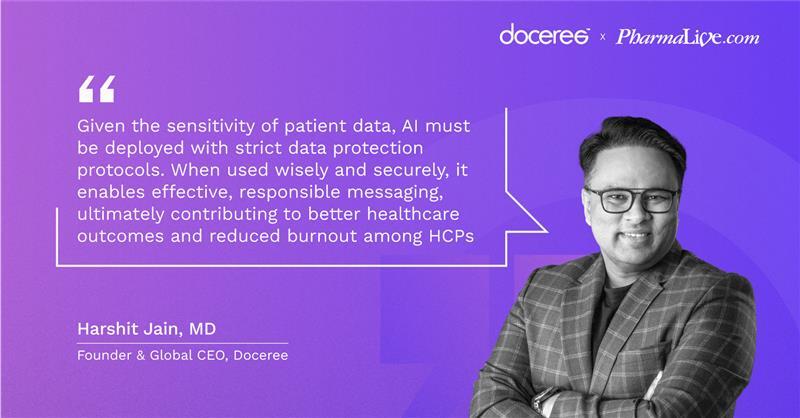
The use of AI in modern age healthcare marketing must be handled responsibly to ensure that the data and insights being leveraged are accurate, ethical, and secure. Verified AI-powered insights enable marketers to craft real-time communication strategies that are grounded in verified, real-time data. By utilizing AI to analyze patient medical details such as medical history, treatment patterns, and HCPs data such as medical speciality, patient care outcomes, marketers can create highly relevant, personalized messages that enhance patient care while supporting HCPs in their roles. However, given the sensitive nature of patient information, AI must be implemented with strict adherence to data protection protocols while crafting such messaging. By employing AI wisely and securely, marketers can ensure their messaging is both effective and responsible, ultimately contributing to better healthcare outcomes and reduced burnout among HCPs.
- Associate with an expert certified for knowing HCPs’ Needs
While many claim to understand the integrities of the healthcare marketing landscape, it goes unsaid that not all marketing experts are equipped to navigate the complexities of healthcare communication. It’s important to partner with organizations recognized for their expertise and credibility in terms of data employment and AI-precision capabilities. One key indicator of a trustworthy partner is adherence to government standards and certifications, such as HIPAA (Health Insurance Portability and Accountability Act) compliance certification, which ensures the protection of sensitive patient data. Additionally, collaborating with partners who have United States Patent and Trademark Office (USPTO) patented technology guarantees that the methods and tools adopted by the partner would be cutting-edge and legally recognized. Such partnerships help marketers ensure that their messaging strategies are not only effective but also safe, ethical, and aligned with the healthcare industry’s strict privacy and security standards.
Entering 2025 with a renewed take on ‘HCP engagement’
Considering the ever-evolving nature of the healthcare industry, smart nudging can reduce HCP burnout by delivering personalized, context-aware messaging that aligns with their specific needs and challenges, thus easing the overwhelm they experience. Rather than overwhelming HCPs with promotional content, nudging can additionally focus on providing restorative resources, such as information on self-care, stress management, and improving workflow efficiency. Additionally, gamified continuing education—via short, interactive modules with rewards—can engage HCPs without adding pressure. Further, real-time clinical decision support nudges can also provide timely decision-making tools at critical points in patient care.
Adopting approaches such as compliant use of patient and HCP data, along with delivering messages through exclusive platforms for doctors, can help align marketing campaigns with patient-centric goals, moving beyond mere numerical targets to drive greater impact. For example, a study involving over 84,000 individuals found that AI-optimized daily nudges increased daily physical activity by 6.17 percent and weekly moderate-to-vigorous activity by 7.61 percent. Therefore, streamlining information overload by nudging HCPs to focus on the most relevant data during clinical workflows can reduce cognitive strain. Positive reinforcement for engaging in self-care practices, such as exercise or seeking professional help, can also promote wellness, while feedback loops encouraging self-assessment of work-life balance can help HCPs adjust their workload to avoid burnout.