
How to Access Hard-to-Reach Audiences with Programmatic Messaging
Originally Posted on Catalyst Magazine May 19, 2025
It’s one thing trying to reach consumers when you have every marketing resource, tool and strategy at your disposal. But when regulatory constraints severely limit how you can market to end consumers, it’s time to get creative.
Only in the US and New Zealand are pharmaceutical marketers permitted to market directly to the end user of prescription drugs. In every other instance, their only communication contact is through healthcare professionals (HCPs). The standard form of practice would have been to engage HCPs at conferences, through drug rep activities, and so on. However, HCPs are increasingly resistant to these approaches, not least because they are a time-poor audience who need to sift through huge volumes of information on a daily basis.
Ethical concerns, regulatory restrictions and strict enforcement of data protection also often p Portability and Accountability Act (HIPAA), guidelines such as the Health Insurance pose as a roadblock for pharma also often pose as a roadblock for pharma marketers in their attempts to reach their end consumers.
But new avenues are emerging. Pharmaceutical marketers are increasingly shifting focus to programmatic messaging solutions to engage their audience. A recent study conducted in the US found that about 69% of pharma marketers in the country prefer programmatic messaging platforms to reach out to HCPs. Programmatic marketing solutions that can leverage the power of artificial intelligence s (AI) and remain HIPAA-compliant at the same time play an important role. By securely leveraging technology, these tools help modern healthcare marketers reach HCPs without overstepping any regulatory boundaries. Over the past few years, we’ve seen a within endemic walled gardens and point-of significant surge in performance campaigns - care platforms – e-prescribing (eRx), telehealth and electronic health record (EHR) platforms – where data is collected directly from the HCP’s via log-ins.
There has been a 39% year-on-year increase in the use of such platforms. This has served as the basis for implementing programmatic marketing campaigns in the pharma sector. There have been some key highlights of this trend.
- Audience segmentation and data utilisation - Pharma marketers leverage first-party data, third-party data and contextual insights to define target audience segments. These segments include HCPs and patients with specific conditions.
- Personalisation of content- For pharma marketers, this is of particular importance as it helps their messaging become a better fit for targeted HCP’s all while adhering to strict compliance rules. For personalised ad targeting cardiologists will highlight relevant data or a drug that’s of interest to the HCP. Adverts can be delivered through programmatic platforms but customised to fit the audience.
- Compliance and privacy management- Pharma marketing is governed by stringent regulatory frameworks such as the HIPAA in the US. In programmatic targeting, sensitive health-related data is anonymised, and platforms use contextual targeting to serve ads on relevant sites without infringing on patient privacy. Additionally, all advertising content undergoes rigorous review to meet legal & ethical standards.
In addition to the aforementioned benefits, programmatic marketing also offers one great strength: its ability to connect with niche, hard-to-reach audiences, such as HCPs – with over 50% of them unresponsive to marketers.
- Engaging healthcare professionals - HCPs, like physicians, pharmacists and specialists, are difcult to reach through quality through per high-value, relevant content. Maintain demanding schedules and preference for traditional marketing channels due to their personalised ads that address the specific interests and needs of HCPs, such as clinical trial updates, treatment guidelines or drug efficacy data.
- Reaching patients with rare diseases - Programmatic marketing can also help marketers reach patients who have rare conditions with relevant ads. Such patients often face limited treatment options. Traditional mass-market advertising is unlikely to resonate with these audiences, but programmatic marketing provides a tailored approach using anonymised data from healthcare providers and condition-specific from target forums to identify patients likely to benefits targeted therapies.
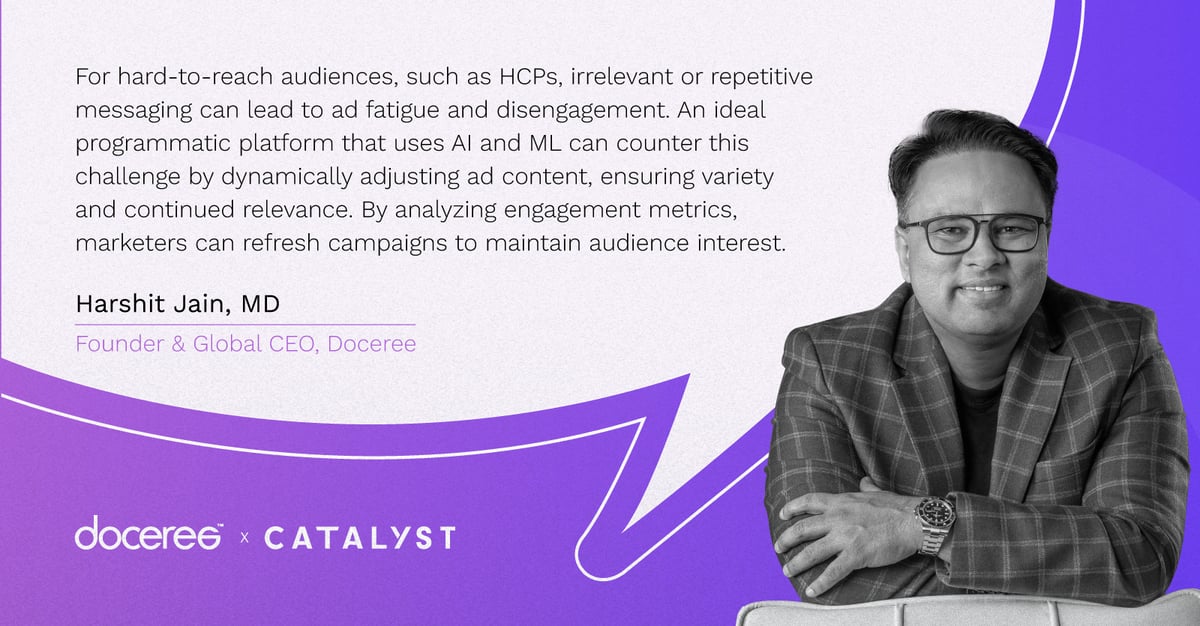
- Overcoming messaging fatigue- For hard-to-reach audiences such as HCPs, irrelevant or repetitive messaging can lead to ad fatigue and disengagement. An ideal programmatic platform that uses AI and ML can counter this challenge by dynamically engagement metrics, adjusting ad content, ensuring variety & continued relevance.